
 See My Latest Article on HelloNation
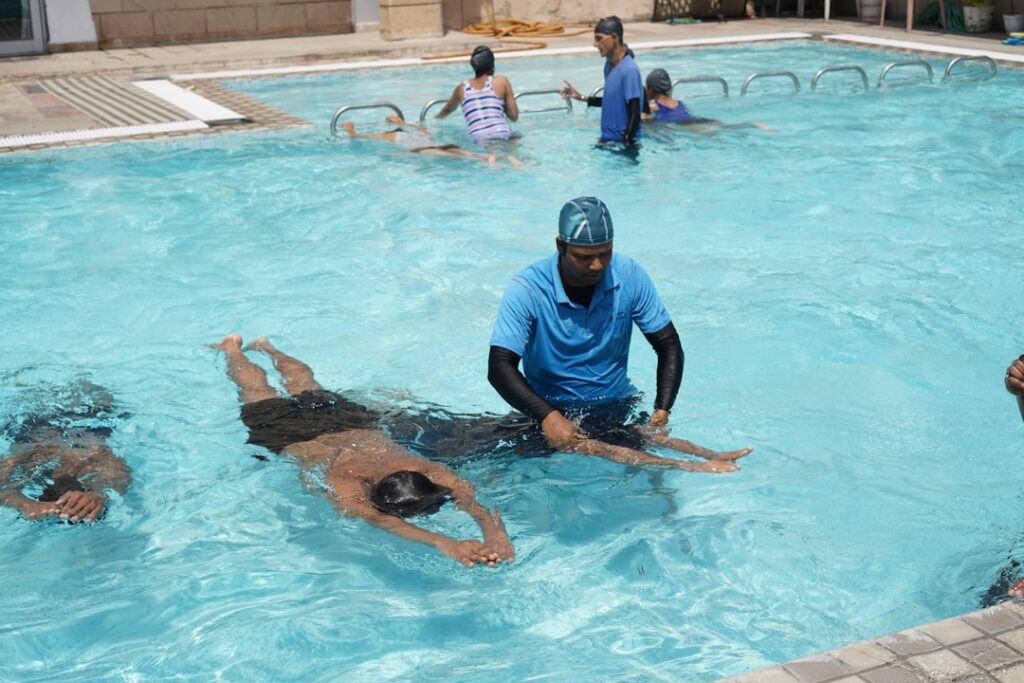
Learning to swim as an adult is not too late. Adults can develop comfort, breathing control, floating skills, and basic water safety at any age, although progress depends on prior experience, fear level, physical condition, and how consistently they practice.
For many residents in Roswell, GA, learning to swim becomes relevant because of backyard pools, community recreation, family outings, travel, or the need to feel safer around water. Adult beginners do not need to become competitive swimmers to benefit. The first goal is usually practical confidence: staying calm, controlling breathing, floating, changing position, and reaching safety.
Why do adults often feel nervous about learning to swim?
Adult anxiety around water is common and does not mean someone lacks coordination or athletic ability. Many adults had limited access to swim lessons as children, experienced an upsetting event, or learned to avoid water because they were unsure how to respond in it.
Fear may also come from specific situations, such as:
- Not being able to touch the bottom
- Putting the face underwater
- Losing balance while floating
- Inhaling water unexpectedly
- Feeling embarrassed around more experienced swimmers
- Having difficulty coordinating breathing and arm movements
A calm learning environment matters. A qualified swim instructor should be able to adjust the pace, explain each step clearly, and avoid forcing a learner into water activities before the person is ready. Trust and repetition are often more useful than pressure.
What should an adult learn first?
Adults should begin with water comfort and safety skills rather than trying to swim a full lap immediately. The early stages commonly include:
- Entering and exiting the water safely
- Holding the pool wall and moving along it
- Blowing bubbles or exhaling underwater
- Floating on the front and back with support
- Returning from a face-down position to a standing position
- Gliding short distances
- Kicking while holding a float or the pool wall
- Rolling onto the back to rest and breathe
These skills build the foundation for common strokes. Freestyle, sometimes called front crawl, usually becomes easier after a learner can coordinate a steady kick, relaxed body position, and side breathing. Breaststroke and backstroke may be introduced later, depending on the learner’s goals.
An adult who can float, breathe calmly, and move a short distance is developing meaningful water competence even if the stroke technique is not polished.
How long does it take to learn to swim?
There is no reliable fixed timeline. Some adults become comfortable with basic movement after several weeks of regular swim lessons, while others need months of gradual practice. A person with prior water experience may progress quickly, while someone with strong fear may need more time before attempting independent swimming.
Progress is influenced by:
- Frequency of lessons and practice
- Comfort putting the face underwater
- Ability to relax while floating
- Strength, balance, and joint mobility
- Quality of instruction
- Pool depth and temperature
- Personal goals
Short, consistent sessions are often more productive than occasional intensive visits. An adult who practices one or two specific skills between lessons may progress more steadily than someone who tries to learn many techniques at once.
Are private swim lessons better for adult beginners?
Private swim lessons can be useful for adults who want individualized pacing, have significant fear, or need focused correction. One-to-one instruction allows the swimming instructor to observe breathing, body position, kicking, and balance closely.
Small-group swim classes may also work well, particularly for adults who prefer social learning or want a more structured schedule. The important consideration is whether the class is designed for adult beginners rather than swimmers who already feel comfortable in deep water.
A suitable program should explain:
- Whether instruction is beginner-level
- How the class handles fear or anxiety
- Whether the learner can progress gradually
- How water safety is included
- Whether the pool environment supports clear communication
- What equipment and clothing are appropriate

The label “adult lessons” alone does not guarantee that the class will match a learner’s needs.
Can an adult learn to swim without becoming athletic?
Yes. Swimming ability is not limited to people who are highly fit or naturally coordinated. Beginners can start with small movements and gradually improve endurance.
Adults with limited mobility, joint pain, balance concerns, or a chronic health condition may need modifications. Water can reduce impact on the joints, but entering, exiting, and moving in the pool still require attention. Medical guidance may be appropriate for anyone with a condition that affects exercise tolerance, breathing, balance, or consciousness.
The initial goal can be as modest as floating for a few seconds, exhaling underwater, or moving from the wall to a nearby instructor. These are legitimate steps toward safer and more comfortable movement in water.
What if an adult is afraid of deep water?
Fear of deep water should be addressed gradually, not ignored. A learner can first practice in water where the feet can reach the bottom, then work on floating, controlled submersion, and short assisted distances.
Depth should increase only when the person can remain calm and perform basic skills reliably. A swimming instructor may use the wall, a shallow ledge, flotation equipment, or direct support while the learner develops control.
A common misconception is that becoming comfortable in shallow water automatically prepares someone for deep water. It helps, but deep-water safety adds different demands, including sustained floating, controlled breathing, and the ability to reach an exit without standing.
How does local life affect the need for adult swim skills?
In Roswell, warm-weather months often bring more time around pools, water recreation, and outdoor gatherings. Homes with pools and communities with shared aquatic spaces can create frequent opportunities for adults to supervise children or participate in water activities.
Adult swimming ability should never replace active supervision of children. However, basic skills can improve a person’s ability to respond calmly, move toward an exit, or assist with a planned rescue without creating additional danger. Anyone who is not a strong swimmer should avoid entering moving or unfamiliar water to attempt a rescue. Reaching, throwing, or alerting emergency services may be safer choices.
Seasonal swimming also creates a practical reason to start learning before the busiest part of the year. Beginning early allows time to build comfort rather than attempting to learn during a crowded pool visit or family event.
Is learning to swim the same as being water-safe?
No. Learning basic swimming skills is valuable, but water safety includes more than stroke technique. A person may swim several yards and still struggle with fatigue, cold water, panic, poor visibility, currents, or an unexpected fall.
Water safety also involves:
- Avoiding swimming alone
- Knowing where exits and safety equipment are located
- Using appropriate supervision around children
- Wearing a properly fitted life jacket when required
- Following posted rules
- Recognizing fatigue and leaving the water early
- Understanding that pools, ponds, lakes, and other settings have different hazards
Swimming lessons should support judgment as well as movement. The ability to swim one length of a pool does not make every water environment safe.
What should adults expect from their first lessons?
The first lessons may feel slower than expected because the body is learning unfamiliar sensations. Breathing, balance, and relaxation often require more attention than strength. It is normal to repeat basic exercises several times before they feel natural.
A useful beginner program should allow questions, explain why each exercise matters, and measure progress by specific skills rather than comparison with other swimmers. For some adults, success may mean floating independently. For others, it may mean completing a beginner stroke or swimming far enough to reach the pool wall.
Whether the goal is greater confidence, family safety, exercise, or the ability to enjoy the water, adults can learn to swim through gradual instruction and consistent practice. Age is rarely the main barrier; lack of appropriate support, unrealistic expectations, and inconsistent practice are more common obstacles.