
 See My Latest Article on HelloNation
Learning to swim is not a single skill that children master in one step. Most swim programs divide instruction into levels so swimmers can develop comfort, safety awareness, body control, and swimming technique in a logical order.
For families in Roswell, GA, understanding these levels can make it easier to choose age-appropriate swim lessons and recognize whether a child is ready to advance. Level names vary among programs, but the skills behind them are often similar.
What do swim lesson levels mean?
Swim lesson levels describe a swimmer’s current abilities, not simply their age. A level usually reflects comfort in the water, ability to follow instructions, breath control, floating, propulsion, and basic water safety.
A child may move through levels at different speeds. One swimmer may be comfortable putting their face underwater but struggle to float independently. Another may swim short distances but still need help with breathing or safe pool entry. Placement should account for the whole skill set rather than one successful activity.
Most programs organize instruction into a progression such as:
- Water adjustment and safety
- Beginner skills and assisted movement
- Independent floating and short-distance swimming
- Stroke development and endurance
- Advanced technique, fitness, or aquatic readiness
These categories may use different names, colors, or numbers depending on the swim school.
What happens in an introductory or water-adjustment level?
The first level focuses on comfort, trust, and basic safety. Children are introduced to the pool environment while learning how to respond to simple directions.
Typical goals include:
- Entering and exiting the water with assistance
- Blowing bubbles or practicing controlled exhalation
- Getting the face, ears, or head wet as appropriate
- Holding the wall or an instructor’s hand
- Practicing supported front and back floats
- Learning to reach for the wall after a short distance
- Understanding that an adult must supervise near water
For babies and young toddlers, baby swim lessons often emphasize caregiver participation, safe handling, water orientation, and predictable routines. These classes do not make infants “drown-proof,” and a young child should never be considered water-safe because they appear relaxed during a lesson.
Toddler swim lessons may include songs, games, and repeated movements, but the underlying purpose is skill development. A toddler might practice turning toward the wall, holding on, or returning to the surface with assistance.
What skills are expected at the beginner level?
Beginner swim lessons help children move from dependence on an adult or flotation device toward short periods of independent control. The emphasis is on balance, breathing, and body position.
A beginner may work on:
- Front and back floats without continuous physical support
- Rolling from the front to the back to breathe
- Kicking while holding the wall or a float
- Gliding after pushing off the wall
- Swimming a few feet using combined arm and leg movements
- Recovering from a standing position in shallow water
- Safely entering the water and moving toward the side
A swimming instructor may repeat the same skill in several forms because children need to apply it in different situations. For example, floating may be practiced from a calm starting position, after a gentle entry, or after a brief glide.
A common misconception is that a child who can cross a shallow pool is ready for unrestricted swimming. Distance alone does not show whether the child can stop, float, breathe, change direction, or reach safety when tired.
What is taught at the intermediate level?
Intermediate swimmers usually have basic control but need greater consistency, distance, and independence. Lessons begin to connect individual skills into recognizable swimming patterns.
Instruction may include:
- Freestyle with coordinated breathing
- Backstroke fundamentals
- Streamline position after pushing off
- Efficient kicking and arm recovery
- Swimming longer distances without stopping
- Treading water for short periods
- Turning around in the water
- Retrieving an object from a safe depth
- Practicing responses to fatigue or accidental entry
At this stage, the swim instructor may spend less time physically supporting the swimmer and more time giving technical feedback. Children may be asked to swim without goggles briefly during a safety exercise, roll to their back to rest, or reach for the wall from a short distance.
Progress can look uneven. A swimmer may have a strong freestyle but weak back floating, or good endurance but poor breathing technique. Advancement should be based on reliable performance across several skills rather than one impressive lap.
What does an advanced level involve?
Advanced swim classes are generally for swimmers who can move independently and are ready to improve efficiency, endurance, and stroke technique. The focus shifts from simply staying afloat to swimming with control over longer distances.
Advanced instruction may cover:
- Freestyle and backstroke refinement
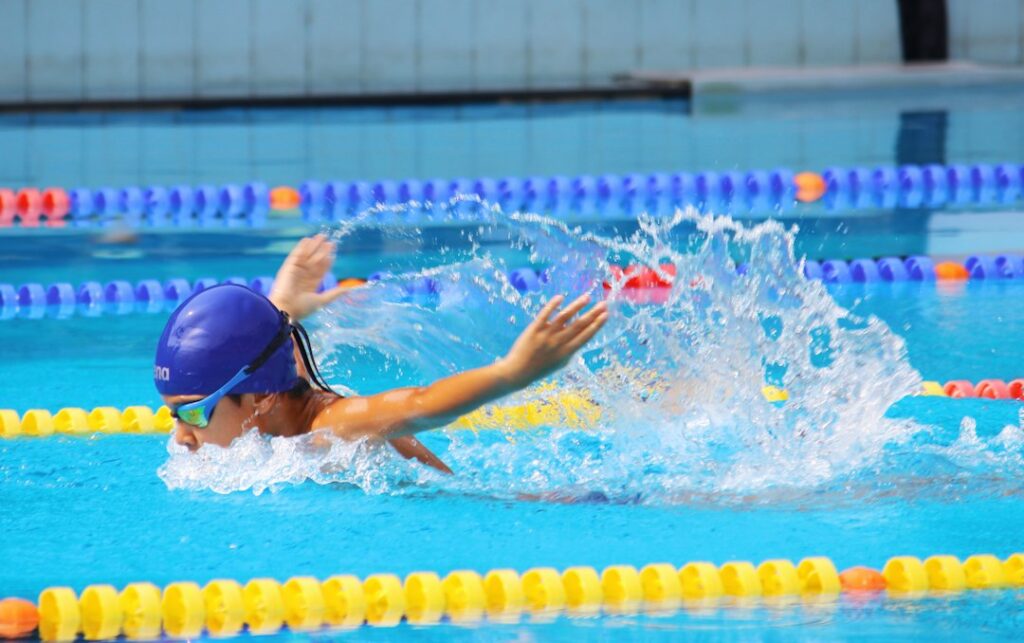
- Breaststroke or butterfly foundations
- Flip turns and open turns
- Starts, streamlines, and underwater travel
- Treading water with improved efficiency
- Swimming continuously for fitness
- Water safety and self-rescue scenarios
- Preparation for recreational, competitive, or other aquatic activities

Advanced lessons do not eliminate the need for supervision. Strong swimmers can still become exhausted, misjudge distance, encounter cold water, or struggle in unexpected conditions. Skill level should never be treated as a substitute for barriers, attentive supervision, or safe water habits.
How are private swim lessons different from group levels?
Private swim lessons may follow the same general progression as group instruction, but the pace and lesson content can be more individualized. A private instructor may spend additional time on one specific need, such as putting the face underwater, floating, breathing, or correcting an uneven stroke.
Private instruction can be useful when a swimmer:
- Has anxiety or sensory concerns
- Needs a slower introduction to the water
- Is ready to advance quickly in one area
- Requires focused stroke correction
- Has limited availability for group classes
- Benefits from fewer distractions
Private lessons are not automatically the right choice for every child. Some swimmers learn well by watching peers, taking turns, and practicing in a group. The best format depends on temperament, goals, comfort, and the quality of instruction.
Should age determine a child’s swim lesson level?
Age can help organize classes, but it should not be the only placement factor. Children of the same age may have very different water experiences, physical coordination, confidence, and learning needs.
A child’s placement may be influenced by:
- Previous swim lessons
- Exposure to pools or natural water
- Comfort with submersion
- Ability to follow directions
- Floating and breath-control skills
- Physical development and coordination
- Attention span and response to group instruction
Families should share accurate information during enrollment or assessment. Describing a child as “almost swimming” is less useful than explaining exactly what the child can do: for example, whether they can float independently, swim five feet, roll to their back, or reach the wall.
How can families recognize meaningful progress?
Progress is more than moving to a higher-numbered class. A swimmer is developing useful skills when they become more independent, consistent, and adaptable.
Signs of progress may include:
- Less reliance on an adult for balance or movement
- Greater comfort putting the face in the water
- Ability to float and recover calmly
- More controlled breathing
- Better awareness of pool rules
- Ability to stop, rest, or change direction
- Improved stamina without frantic movement
For households with pools or frequent access to community water, regular practice can reinforce lessons. Practice should remain supervised and should focus on skills the child has already been taught. Water confidence should be paired with caution, because comfort in the water can sometimes lead children to take risks.
Understanding swim lesson levels helps families evaluate progress realistically. The goal is not simply to move through classes quickly. It is to build dependable skills that support safer decisions, controlled movement, and continued learning in the water.